Julian Zelizer: Hey, everyone. Welcome back to Then and Now. I’m Julian Zelizer of The Long View.
Jonathan Alter: And I’m Jonathan Alter of Old Goats.
Julian Zelizer: I caught the story where President Trump said he’d like to renovate part of Mar-a-Lago and turn it into a new Camp David for foreign leaders, for U.S. presidents in the future. Not a surprise.
But it obviously brought you to mind. You wrote the great biography of Jimmy Carter, where Camp David was very important. It’s nice when President Trump does these things to provide a little reminder of the history of some of the institutions he’s talking about or trying to displace.
Your thoughts on Camp David, particularly during the Carter presidency and what happened there?
Jonathan Alter: Camp David started out as Shangri-La, it was called. It was this little rustic setting, owned by the U.S. government, with these cabins. President Eisenhower decided he liked it, and he named it after his grandson, David Eisenhower, who’s married to Julie Nixon. He started going there and bringing international guests there.
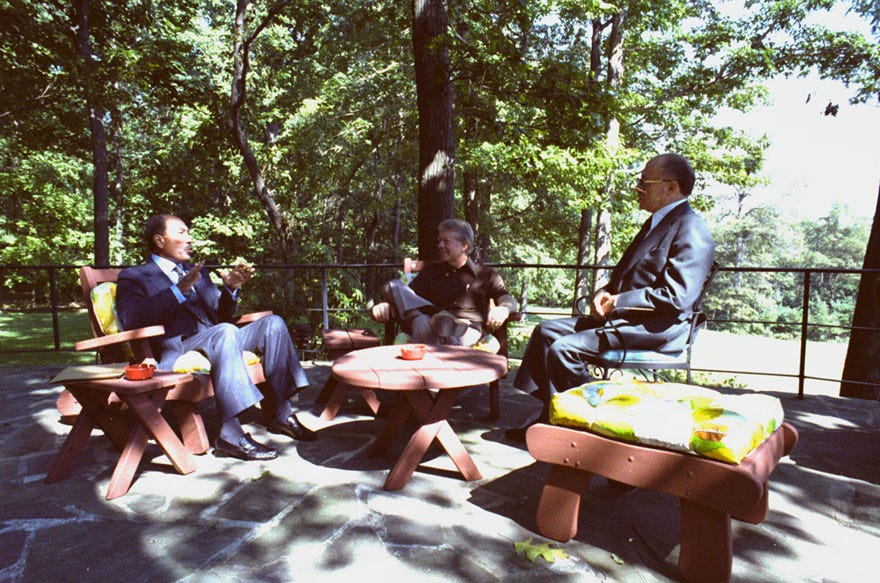
It was used by every president after Eisenhower, but most by Jimmy Carter. It really appealed to him, and it tells you something about who Jimmy Carter was that he just loved the place. He loved the modesty of it and the connection to nature.
Not surprisingly, Trump has no use for it at all. In his first term, he said he would bring the Taliban to Camp David, which was just another one of his idiotic ideas. But mostly he didn’t want to have anything to do with it.
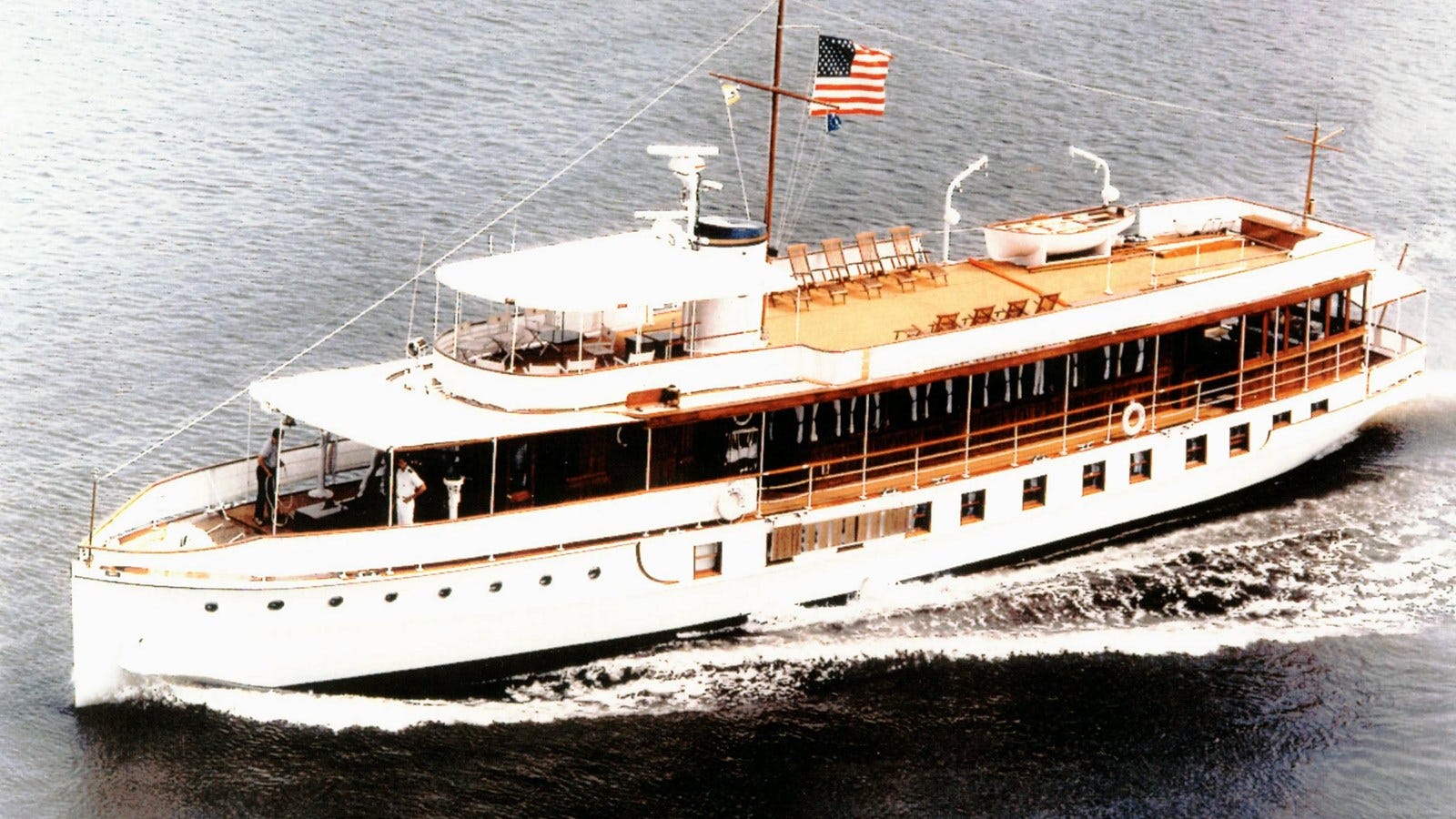
Now he wants to build a sort of Mar-a-Lago-style retreat for presidents. I can tell you what will happen to that: If a Democrat is elected, it will be immediately closed and sold, in the same way that Jimmy Carter inherited a presidential yacht called the Sequoia that had been used by a number of presidents and that many of them liked very much. Nixon and Roosevelt loved the Sequoia.
One of the first things Carter did was to sell it. And that’s one of the first things a Democratic president will do: sell this boondoggle that Trump is trying to create as just another monument to himself. It won’t endure.
Julian Zelizer: That is a good comparison with the Sequoia. By the way, have you ever been to Camp David in your reporting?
Jonathan Alter: I have not. There are very few reporters who’ve ever been there—some who are friends of the president, I guess. I’m sure there are a few examples, but I know a lot of people who have, and I studied it pretty closely when I was writing my Carter book.
Such a historic event happened there. The press was allowed in very, very briefly for a kind of concert they had when Anwar Sadat and Menachem Begin were brought to Camp David, but they couldn’t stay.
Barbara Walters tried to hide in the bathroom as the press van was leaving because she wanted to hang around to find out what was going on. Gerry Rafshoon, who was a Carter aide, found out about it. He goes into the ladies’ room, and he goes, “Barbara, Barbara, we know you’re in there.”
She sheepishly comes out of the stall and gets on the press bus and has to leave Camp David like all the other reporters.
Just one other quick thing about what happened there with Jimmy Carter: This was the most enduring peace agreement since the end of World War II—the Camp David Accords. Just imagine how much worse the Middle East would be right now if Israel and Egypt were at odds.
They have a cold peace, but they do have peace. The nation with the largest army in the region is at peace with Israel. In that sense, Jimmy Carter did more for the security of the state of Israel—even though he was the first one to call for a Palestinian state—by taking the Egyptian army off the table than any other president since Harry Truman recognized Israel.
Julian Zelizer: Thank you for that incredible Barbara Walters story! Thanks, Jon.